How the iqama works
Most foreigners who live in Saudi Arabia hold an iqama: the residence permit of an employee, sponsored by the employer. It is your identity in the Kingdom for a bank account, a lease on Ejar, utilities and government services, and it gives you access to the Nafath digital identity. The route has four parts, each on a government platform.
- The visa. Your employer applies for a permanent work visa on Qiwa, the Ministry of Human Resources' platform; the service is free. The visa is then issued through the Ministry of Foreign Affairs' KSA Visa platform, which lists the permanent work visa for workers with long-term contracts.
- The contract. Under article 37 of the Labour Law, a foreign worker's contract must be written and for a fixed term. A contract that states no term runs for one year from the start date, and renews for a similar period if the work continues.
- The work licence. Once you arrive, the employer must issue your work licence on Qiwa within 90 days of your entry, for a fee of SAR 100, paid through Sadad.
- The residence. The employer sponsors your iqama and insures you: under the Cooperative Health Insurance Law, the sponsor of a resident must provide health cover, and private employers insure their employees and their families.
Who can get an iqama: eligibility
| Condition | What the Labour Law requires |
|---|---|
| Work permit | A permit from the Ministry of Human Resources, on its form (article 33) |
| Entry | You entered the Kingdom legally and are authorised to work |
| Skills | Qualifications the Kingdom needs where Saudis are not available or not enough, or a category of workers it needs |
| Employer | You are under contract with, and the responsibility of, an employer |
| Contract | Written and for a fixed term (article 37) |
| Profession | You may not change profession without completing the legal procedure (article 38) |
| Employer standing | The employer must not be in Nitaqat's red band, or licences cannot be issued or renewed |
The last row matters more than most new arrivals expect. If your employer's Saudisation band falls into the red, it cannot issue or renew work licences, so ask about its Nitaqat position before you sign.
Iqama costs, and who pays
| Fee | Amount | Who pays |
|---|---|---|
| Recruitment fees | Set by the authorities | Employer (article 40) |
| Residence (iqama) fees and renewals | Set by the authorities | Employer (article 40) |
| Work licence | SAR 100, plus the expatriate levy | Employer |
| Profession change | Set by the authorities | Employer (article 40) |
| Exit and re-entry visas | Set by the authorities | Employer (article 40) |
| Transfer of your services to a new employer | Set by the authorities | The new employer (article 40) |
| Ticket home at the end of the job | The fare | Employer, unless you leave without a legitimate reason or are unfit for work |
| Levy on dependants | Monthly, for each family member | Charged on your family's residence |
| Health insurance | Priced by the insurer | Your sponsor |
The expatriate levy and the dependants' levy are set by government decision and have changed before, so ask your employer for the current figures in writing. The dependants' levy is the cost that most often surprises families: Premium Residency holders and their families are exempt from it, which is one reason senior hires look at Special Talent.
Documents for a work visa and iqama
Your employer holds most of the file: the visa issued through Qiwa, the signed contract and the company's records. From you, expect your passport, a photograph, the qualifications your profession requires and anything the Saudi embassy or visa centre in your country asks for. For your family you need passports and the documents that prove each relationship, such as a marriage certificate and birth certificates, attested where the embassy asks.
Your family on an iqama
Once your iqama is issued, you can bring your immediate family on residence visas, which the KSA Visa platform describes as letting residents sponsor close relatives to live with them for as long as their own residence is valid. Each dependant on your file carries the levy on dependants, and your employer's insurance covers them under the Cooperative Health Insurance Law. Relatives who only come to stay can use the family visit visa on KSA Visa: USD 80, plus USD 21 in digital service fees and the insurance premium.
Changing jobs and travelling
Qiwa's freedom of movement service lets a resident employee move to a new employer without the current employer's approval, subject to its conditions. The new employer sends a job offer on Qiwa, you accept it from your account, the current employer is notified, and a new work permit is issued. The service is free. Your residence still depends on having an employer, so plan any gap between jobs with care.
Each trip abroad needs an exit and re-entry visa, issued through Absher or your employer's Muqeem account, and the employer bears the fee. If you are abroad when it runs out, the KSA Visa platform has a re-entry visa extension service.
Renewal, and how an iqama ends
The employer renews your work licence on Qiwa once 180 days or fewer remain, and renews your residence, paying both sets of fees. Your residence lasts as long as that employment: when the job ends, you move to a new employer through Qiwa, switch to another route such as Premium Residency, or leave the Kingdom on final exit, with the employer paying your ticket home.
Buying a home on an iqama
The Non-Saudi Real Estate Ownership Law took effect on 22 January 2026, and its implementing regulations were approved on 23 June 2026. For an iqama holder the position is this.
| Resident with an iqama | Buyer living abroad | |
|---|---|---|
| Inside the designated zones | Yes | Yes |
| One home for personal use outside the zones | Yes, except in Makkah and Madinah | No |
| How to apply | REGA's Saudi Properties platform, with the iqama number | The same platform, with a digital identity approved by the Ministry of Interior |
| Makkah and Madinah | Muslim individuals, inside the designated zones | The same |
Every purchase is registered in the Saudi Real Estate Registry. The eligibility checker applies the rules to you, and the foreign ownership guide sets them out in full.
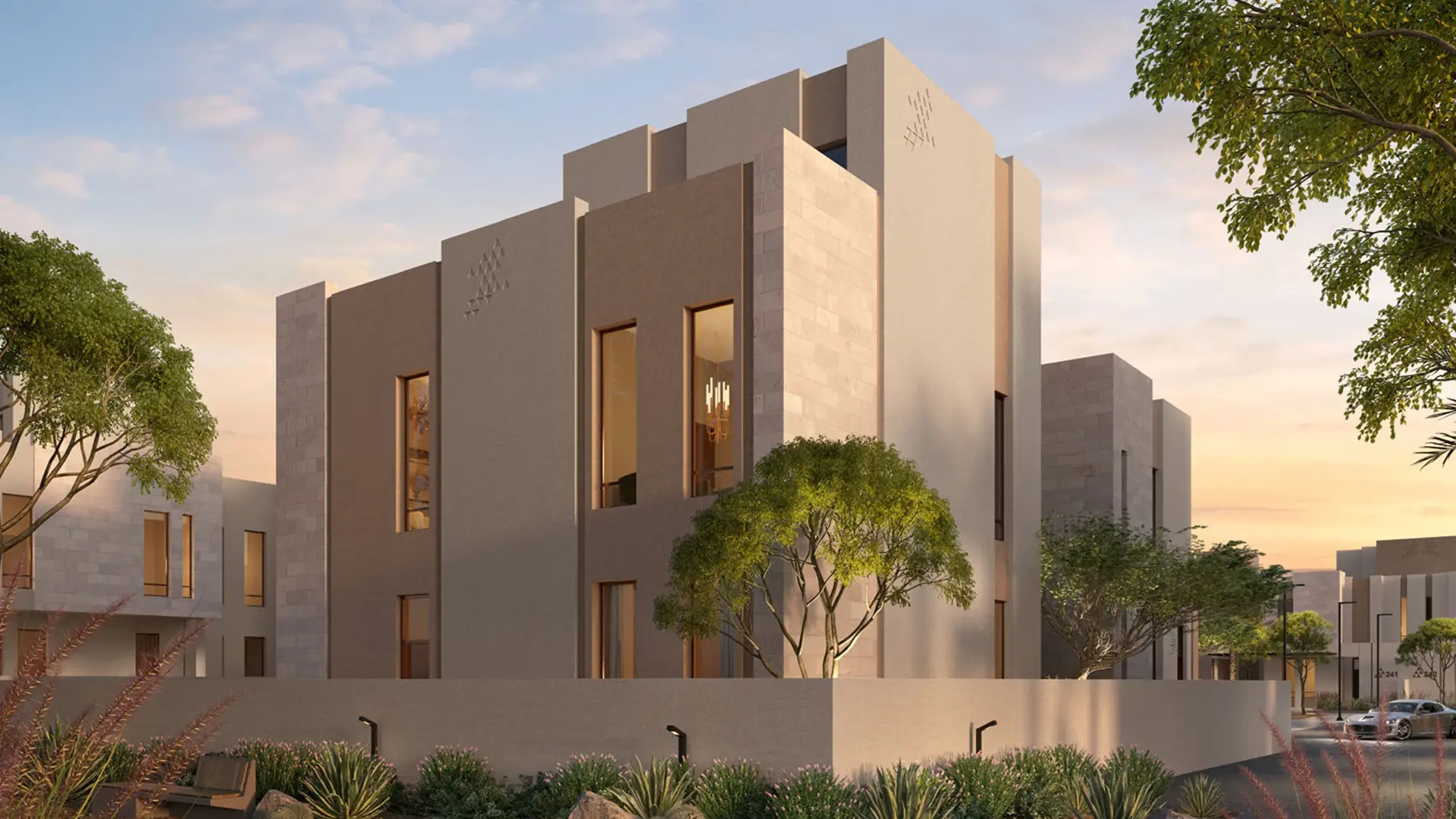
Worked example: a villa outside the zones. A family on an iqama buys a four bedroom villa at Rivan Villas in Al Rafiah, Riyadh, at SAR 2,769,000. Al Rafiah is outside the zones, so this is the family's one home for personal use, open to them because they are resident.
| Line | Amount | Note |
|---|---|---|
| Price | SAR 2,769,000 | Four bedrooms, 345 to 418 sqm |
| Payment | In stages under Wafi | Into the project escrow account, released against certified progress |
| Real estate transaction tax, 5% | SAR 138,450 | If the contract passes it to you |
| Brokerage | SAR 0 | The developer pays our fee |
| Registration | At title transfer | In the Saudi Real Estate Registry |
| Premium Residency | Not available | Below the SAR 4 million value |
Several Saudi banks lend to resident expatriates on their own criteria; the mortgage calculator and our guide to mortgages for foreigners show what you can borrow.
If you leave the Kingdom
A home inside a designated zone can be owned by a non-resident, so leaving does not affect it: you can keep it, let it through Ejar or sell it. The right to a home outside the zones belongs to residents, and the published guidance does not settle what happens to it when residence ends. If you may leave within a few years, buying inside a zone keeps your options open; take legal advice before you buy outside one. When a non-Saudi sells in the zones of Riyadh, Jeddah, Makkah or Madinah, REGA charges a fee of 2% of the value: a cost when you sell, not when you buy.
Iqama or Premium Residency
| Iqama | Special Talent | Real Estate Owner | |
|---|---|---|---|
| Sponsor | Your employer | None | None |
| What it rests on | Your job | A qualifying job and salary | A home worth SAR 4m, no mortgage |
| Fees to you | Few directly; the employer bears most | USD 170 and SAR 4,000 | USD 170 and SAR 4,000 |
| Dependants' levy | Charged | Exempt | Exempt |
| Exit and re-entry | A visa for each trip | No visa | No visa |
| Changing jobs | Through Qiwa, on its conditions | Approved employer at the salary threshold | Free to move |
An iqama costs you little directly, but it ties your stay to your job. Special Talent suits senior professionals who meet its salary thresholds, and the Real Estate Owner product suits owners of a home worth SAR 4 million or more with no mortgage. The residency pathfinder compares them for you. This page is general information, not immigration or legal advice.
Your property in the Kingdom
An investment or a business
Work in the Kingdom
What you would pay for residency
Time in the Kingdom
Closest match
Premium Residency: Real Estate Owner
90
Fit out of 100
Why this route
your home meets its SAR 4 million test, and the fee is SAR 4,000, once, and it lasts as long as you own the home.
- What qualifies
- A developed residential property worth SAR 4 million or more, owned or held in usufruct, free of any mortgage and valued by a valuer accredited by Taqeem
- Fee
- SAR 4,000, once
- How long
- As long as you own the property
The other routes
- InvestorSAR 4,000, once
It needs a licensed investment of SAR 7 million or more, with 10 jobs.
- EntrepreneurSAR 4,000, once
It is for founders backed by an investor the Centre accredits.
- Special TalentSAR 4,000, once
It needs a job in the Kingdom at a set minimum wage.
- Limited DurationSAR 100,000 a year
It costs SAR 100,000 for each year.
- Unlimited DurationSAR 800,000, once
It costs SAR 800,000, paid once.
Owning property does not by itself give residence.
Every Premium Residency product lets you:
- Live in the Kingdom with your family, including parents, spouse and children under 25
- Work in the private sector and change employer
- Leave and return without an exit and re-entry visa
- Exemption from the expatriate fees
- Own or hold property in usufruct, except in Makkah, Madinah and border areas
General guidance, not immigration advice. Thresholds and fees are the Premium Residency Centre's published figures, checked 2026-11-15; the Centre also charges a processing fee of USD 170 when you apply. The fit scores are our own reading of each route against five answers. See visas and residency.
Sources for these figures
- Premium Residency Centre, Real Estate Owner residency
- Premium Residency Centre, Investor residency
- Premium Residency Centre, Entrepreneur residency
- Premium Residency Centre, Special Talent residency
- Premium Residency Centre, Gifted residency
- Premium Residency Centre, Limited and Unlimited Duration residency
- Premium Residency Centre, conditions and controls (processing fee, benefits)
- Premium Residency Centre, frequently asked questions (valuation by a Taqeem-accredited valuer)
Send me the ranking
Your answers and the routes ranked against them, by email, with an adviser to show you homes that meet the SAR 4 million test.