Can foreigners buy property in Makkah and Madinah?
Yes, if they are Muslim. The Non-Saudi Real Estate Ownership Law, in force since 22 January 2026, opened the two holy cities to buyers from abroad for the first time, on narrower terms than Riyadh or Jeddah. Article 2 limits non-Saudi ownership in Makkah and Madinah to Muslim natural persons. The Real Estate General Authority guide of 23 June 2026 states the rule plainly: ownership in the two cities is limited to residential property and restricted to Muslim individuals from inside and outside the Kingdom, as well as Saudi companies.
| Buyer | Position in Makkah and Madinah |
|---|---|
| Saudi citizens | Own without the non-Saudi rules |
| Muslim individual living in the Kingdom (iqama or Premium Residency) | May own residential property inside the designated zones |
| Muslim individual living abroad | May own residential property inside the designated zones |
| Saudi company with foreign shareholders, not listed | May own inside the zones for its business and to house its staff (law, Article 3) |
| Listed companies and licensed funds | May own under Capital Market Authority rules (law, Article 4) |
| Non-Muslim individual | May not own property in either city |
| Investor in listed shares | Since 27 January 2025 may hold shares in listed companies owning real estate in the two cities, up to 49% foreign ownership in total |
Two points catch buyers out. First, the resident's right to own one home for personal use outside the zones, which Article 2 gives a legally resident non-Saudi elsewhere, does not apply in Makkah or Madinah. Second, the implementing regulation lets a Saudi company with foreign shareholders own inside the zones of the two cities without Ministry of Investment approval (Article 8), but a company registered abroad has no route there. Most families buy in their own names. If you plan to buy through a company, take independent legal advice on the structure before you reserve.
Nationality is not the test. A Muslim buyer from Pakistan, India, Egypt, Indonesia, Britain or the United States buys on the same terms; the law looks at religion, residence and the legal form of the buyer. Our foreign ownership guide sets out the law for the rest of the Kingdom.
Where foreigners can buy in Makkah and Madinah: the designated zones
Ownership follows a published map, not the city boundary. The Council of Ministers approved the designated zones on 23 June 2026, and REGA's list for the two cities reads as follows (Argaam, citing REGA).
| City | Zones named on approval |
|---|---|
| Makkah | Abraj Makkah, Al Manar, Ajyad Tower, King Salman Gate, Tilal Village, Jabal Omar, Thakher Makkah, Sumou Suburb, Masar, and Makkah zones 1 and 2 |
| Madinah | Al Ghurra, Madinah zones 1 and 2, Al Mahwa, Darat Al Hijrah, Madinah Downtown, Diyar Al Maqar, Rua Al Madinah, Knowledge Economic City, and Meshraf |
A project name on the list is a starting point. The boundary on the Saudi Properties zones map and the title deed decide whether a given building qualifies, so we check the parcel against the map before any reservation.
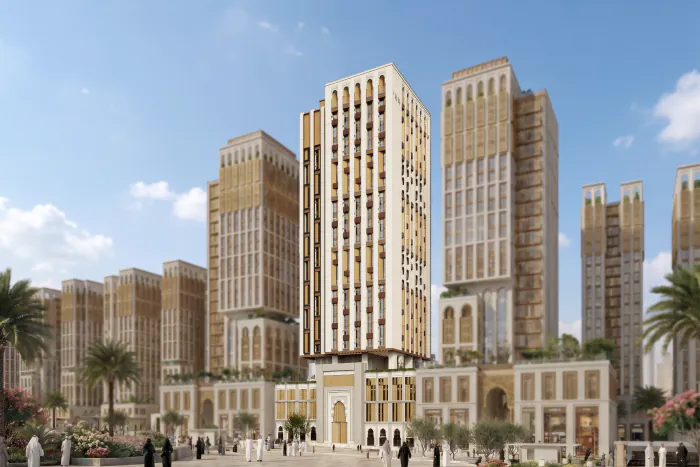
The zones range from the Haram's edge to the suburbs. Masar is the corridor on King Abdulaziz Road that ends about 550 metres west of the Grand Mosque (Saudipedia). King Salman Gate, beside the Grand Mosque, is planned with up to 12 million sqm of floor area, about 900,000 sqm of prayer space and 16,000 hotel rooms (Knight Frank). In Madinah, Rua Al Madinah covers 1.5 million sqm east of the Prophet's Mosque and is planned around 47,000 hotel rooms, while Meshraf is a neighbourhood of villas and apartments in Al Hadra, in the east of the city.
Property for sale in Makkah and Madinah
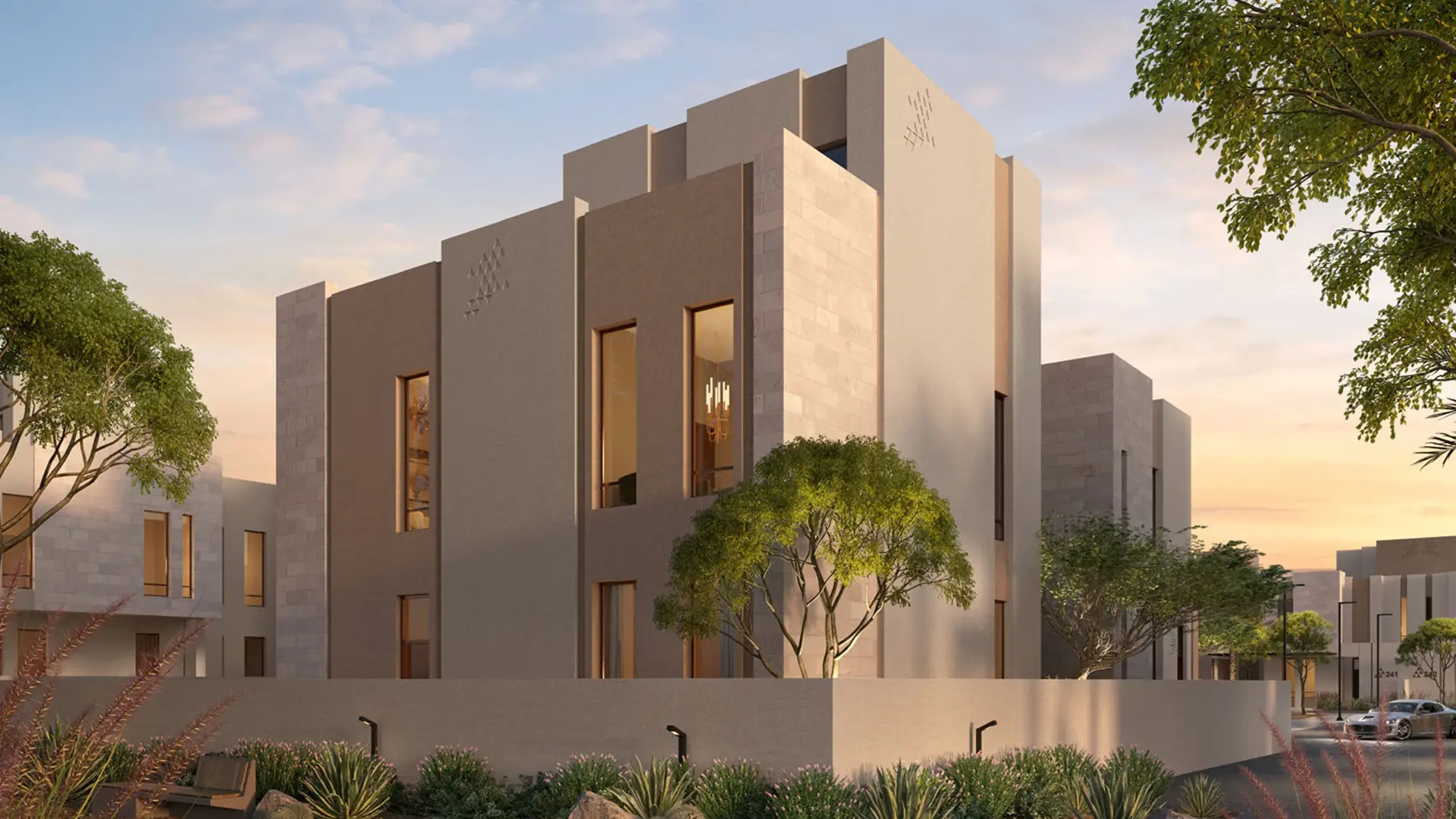
We sell two developments in the holy cities, both by Al Majdiah, both inside named zones.
| Ma'ad Tower | Meshraf Al Majdiah | |
|---|---|---|
| City and zone | Makkah, Masar | Madinah, Meshraf in Al Hadra |
| Distance | About 1.7 km from the Grand Mosque | About 9.6 km from the Prophet's Mosque |
| Homes | 157 apartments and 4 commercial units | 412 villas and apartments in 14 buildings |
| Price evidence | Price list on release; registered buyers see it first | Phase one, 304 homes, sold for SAR 231,466,000 |
| How it is sold | Off-plan under Wafi, payments in escrow | Off-plan under Wafi, payments in escrow |
| Next step | Register for the release | Register for the next 296 homes |
Meshraf is the proof that the law works in the holy cities. By 29 September 2026 Al Majdiah had sold the whole of phase one, 304 homes, to non-Saudi investors for SAR 231,466,000, about SAR 761,000 a home on average, villas and apartments together. On 10 September 2026 it signed a development agreement with the Jadwa Al Maqar Real Estate Fund for 296 further homes, 66 villas and 230 apartments, with construction planned over 24 months (Arab News). That is a construction term, not a handover date, so we send the Wafi timetable with the price book.
Ma'ad Tower gives a family a new apartment on the approach to the Haram. Walking and driving routes are longer than 1.7 km, and we show you yours on the map before you reserve. Every home we sell in the two cities is under property for sale in Makkah and property for sale in Madinah.
Makkah and Madinah property prices
The two markets moved in opposite directions in 2025 (Knight Frank, April 2026).
| Measure, end of 2025 | Makkah | Madinah |
|---|---|---|
| Apartments, average per sqm | SAR 3,500, down 5% | SAR 3,915, up 1.5% |
| Villas, average per sqm | SAR 3,260, down 6% | SAR 3,560, up 1% |
| Dearest apartment districts | Closest to the Grand Mosque, above SAR 15,000 | Shadhah SAR 4,520, Al Aridh SAR 4,360 |
| Homes in the city | About 763,800 | About 458,800 |
Distance from the Haram sets the price in Makkah: apartments closest to the Grand Mosque routinely trade above SAR 15,000 per sqm, more than four times the city average, depending on building quality, views and access. Activity has since picked up. In Q3 2026 sales in Makkah rose 14.1% year on year, while in Madinah volumes fell 33.5% and the average apartment price rose 29.7% (JLL, November 2026). A jump that size reflects which homes sold as much as any change in values, so we value each home against sales of the same type and age.
What it costs to buy in Makkah or Madinah: worked examples
The Real Estate Transaction Tax is 5% of the price. The law makes the seller liable and the contract can pass it to the buyer; on new homes, ask which way the price list reads. Saudi citizens buying a first home get relief: the state bears the tax on the first SAR 1 million (ZATCA). The Real Estate Registry transfer fee was SAR 1,600 in July 2026 (Trowers & Hamlins). On our developments the developer pays our fee, so you pay no brokerage to us.
| Line | Madinah home, non-Saudi buyer | Same home, Saudi first-time buyer | Makkah apartment near the Haram |
|---|---|---|---|
| Price | SAR 761,000 | SAR 761,000 | SAR 1,800,000 |
| RETT at 5%, if the contract passes it to you | SAR 38,050 | SAR 0, borne by the state | SAR 90,000 |
| Registry fee | SAR 1,600 | SAR 1,600 | SAR 1,600 |
| Brokerage to us | SAR 0 | SAR 0 | SAR 0 |
| Total to budget | SAR 800,650 | SAR 762,600 | SAR 1,891,600 |
Assumptions: the Madinah price is the phase-one average at Meshraf; the Makkah case is an assumed 120 sqm apartment at SAR 15,000 per sqm. There is no annual property tax on a home you live in or let.
The exit is where the holy cities differ for a non-Saudi. When a non-Saudi owner disposes of a property (sells it or otherwise transfers it) in the zones of Riyadh, Jeddah, Makkah or Madinah, the Real Estate General Authority charges a fee of 2% of the value (the law allows up to 5%). It is a cost when you sell, not when you buy.
| Selling the Makkah apartment for SAR 1,800,000 | Amount |
|---|---|
| REGA fee at 2%, non-Saudi seller | SAR 36,000 |
| RETT at 5%, unless the contract passes it to the buyer | SAR 90,000 |
| Total if the seller bears both | SAR 126,000 |
Resale buyers in the two cities are limited to Saudis, Muslim individuals and Saudi companies, a narrower pool than in Riyadh or Jeddah, and there is no resale record yet for non-Saudi owners. Buy to use and to hold. The buying cost calculator runs these lines on any price.
Letting a home in Makkah or Madinah to pilgrims
Pilgrim income is the question we are asked most, and three sets of rules apply.
| Way of letting | Rule | Who may hold it |
|---|---|---|
| Long let to a family | Lease registered on Ejar | Any owner |
| By the night to visitors | Private hospitality unit licence, Ministry of Tourism, SAR 1,100 a year, up to 29 nights per guest | A Saudi, or a non-Saudi who owns the unit |
| Housing Hajj groups in season | Seasonal licence through the Ministry of Tourism, linked to Nusuk Masar | Licensed accommodation providers; contracts with missions and agencies go to Saudi owners, investors or lessors |
Nightly lets. The Private Hospitality Unit Regulation, published on 11 September 2026, lets a non-Saudi who owns the unit apply for the licence. The unit must sit in a building zoned residential, agricultural or mixed residential and commercial; bookings and payments must run through licensed platforms; one licensee may hold no more than three licences in a shared building. The licence lasts up to a year. Our short-term rentals guide covers each condition.
Hajj housing. Buildings that house Hajj pilgrims are licensed season by season. Since the 2026 season, licences for pilgrim accommodation are issued through the Ministry of Tourism's platform, applicants register on Nusuk Masar to lease to pilgrims, and hotels with a year-round licence are exempt (Gulf News, October 2025). For the 1448 AH season the ministry added economy and first-class grades and inspections before licensing and through the season (TradeArabia, August 2026). In each city a housing committee chaired by the regional emirate, with the municipality, the Ministries of Hajj and Tourism, Civil Defence and the police, oversees pilgrim housing (Decision 19851, 2023).
The older rule. A Council of Ministers regulation of 1426 AH, still listed as in force, bars Hajj missions, agencies and tourism companies from dealing with non-Saudis over housing pilgrims, Umrah performers and visitors, requires them to contract directly with Saudi owners, investors or lessors, and bars non-Saudis from renting a building to house them. How it sits beside the 2026 tourism regulation for a home you own in a designated zone is a question for a Saudi lawyer.
Our advice is to buy for your own family's use and treat any rent as a bonus. Before you reserve, we ask the developer whether the owners' association allows daily letting and, in a hotel-run building, what own-use rights you keep in Ramadan and the Hajj season.
Premium Residency through a home in Makkah or Madinah
Owning a home does not by itself give residence. Premium Residency has a real estate owner route (Premium Residency Centre, read 16 November 2026):
- Completed homes: owning, or holding the usufruct of, residential property worth at least SAR 4 million, built, not land, and not mortgaged now or later, valued by an accredited (Taqeem) valuer.
- Off-plan: one residential unit worth at least SAR 4 million, bought from a developer approved by the Real Estate General Authority, with at least SAR 1 million or 10% of the price paid, whichever is higher, no mortgage finance, and title transferring within five years of purchase.
- Fee and term: SAR 4,000; it lasts while you own the home, or for off-plan while the purchase contract stands. Family members (parents, spouse, children under 25) are covered. The Centre notes that all conditions may change.
In practice the threshold points to the Haram's edge. At SAR 15,000 per sqm, SAR 4 million buys about 267 sqm near the Grand Mosque; at Meshraf's average of about SAR 761,000 a home, the route needs a far larger purchase. The residency pathfinder tests your case.
Buying from Pakistan, India, Egypt, Indonesia, the UK and the US
Saudi law treats a Muslim buyer from any of these countries the same way. What differs is how you move the money and how your own country taxes the home.
| Country | What to check at home | Our country guide |
|---|---|---|
| Pakistan | Outward transfers follow State Bank of Pakistan rules, so ask your bank before you reserve | Buying from Pakistan |
| India | A resident may send up to USD 250,000 a financial year under the Liberalised Remittance Scheme, and relatives may combine remittances for property abroad (RBI) | Buying from India |
| Egypt | The Saudi and Egyptian double taxation convention has been in force since 1 July 2017 (ZATCA) | Buying from Egypt |
| Indonesia | No country guide yet; the Saudi rules are the same, so ask your bank about transfer limits | Ask us |
| United Kingdom | The UK and Saudi double taxation convention has been in force since 1 January 2009 (HMRC) | Buying from the UK |
| United States | Your Saudi account counts towards the USD 10,000 FBAR threshold; a home held in your own name is not reported on the FBAR or Form 8938 (IRS) | Buying from the US |
If you live and work in the Kingdom, you pay from your Saudi account and no remittance is needed.
How to buy property in Makkah or Madinah, step by step
- Confirm your eligibility and the parcel. We check that the building sits inside a named zone on the Saudi Properties map before you pay anything.
- Get your digital identity, if you live abroad. It must be approved by the Ministry of Interior. Residents use their iqama number instead.
- Open a Saudi bank account. Under SAMA's rules of July 2026, banks ask for a copy of the digital identity, a passport copy where available, your address abroad, contact details and a Saudi mobile number in your name linked to the identity.
- Choose the home and read the documents. For an off-plan home we ask Al Majdiah for the Wafi licence number and check it on the Wafi portal, with the escrow account and the timetable.
- Apply on the Saudi Properties platform. Every non-Saudi purchase runs through saudiproperties.rega.gov.sa.
- Pay by approved electronic channels. Payments follow the Saudi Central Bank's rules; never pay cash or through a third party.
- Register the title. The deed is issued in the Saudi Real Estate Registry, and the transaction tax is settled with ZATCA.
- Plan the use. Register a long let on Ejar, or apply for a hospitality licence before the first guest.
Our how to buy guide covers buying under a power of attorney, and the off-plan guide covers Wafi and escrow. This guide is general information on a new law, not legal or religious advice.
Who is buying?
Where is the property?
Is it inside a designated zone?
What is it for?
Your answer
Start with who is buying.
Since 22 January 2026 non-Saudis may own property inside zones designated by the state and mapped by the Real Estate General Authority, in Riyadh, Jeddah, Makkah and Madinah, and register each purchase with the Authority. In Makkah and Madinah, Muslim individuals may own residential property inside the zones, and Saudi companies may own there for their business and to house their staff.
Owning property does not by itself give residence. A home worth SAR 4 million or more can qualify for Premium Residency.
General guidance on the law and its regulations as published, not legal advice. The law is new and the zones are set by the authorities: take independent legal advice where the structure matters.
Sources for these figures
- REGA, the Non-Saudi Real Estate Ownership Law enters into force, 22 January 2026
- Law of Real Estate Ownership by Non-Saudis, Royal Decree M/14, Article 9 (REGA)
- Implementing Regulations of the Non-Saudi Real Estate Ownership Law, Umm Al-Qura, 3 July 2026
- Deloitte, implementing regulations to the Non-Saudi Real Estate Ownership Law, July 2026
- Arab News, Cabinet approves the zones open to non-Saudi ownership, 24 June 2026
- REGA, Saudi Properties portal: zone map
- Greenberg Traurig, implementing regulations to the foreign ownership of real estate law, 6 July 2026
- Premium Residency Centre, conditions and controls (processing fee, benefits)