Sending money to Saudi Arabia for a property: the order of things
Every payment on a Saudi property is made in riyals, electronically, from an account in the buyer's own name. For a non-Saudi, the implementing regulations of the ownership law route every acquisition through REGA's platform and every payment through electronic systems approved by the Saudi Central Bank (SAMA). For a buyer abroad, the work is in the order of the steps: nothing can be paid until the Saudi account is open, so start there.
| Step | What you do | Where |
|---|---|---|
| 1. Identity | Obtain a digital identity approved by the Ministry of Interior | A Saudi embassy or mission |
| 2. Account and phone | Open a Saudi bank account in your own name and register a Saudi mobile number linked to the identity | A bank in the Kingdom |
| 3. Fund the account | Send money from your account abroad | Your bank, by international transfer |
| 4. Pay the developer or seller | Reservation and instalments into escrow; a resale price through the transfer process | Your Saudi bank |
| 5. Pay taxes and fees | The Real Estate Transaction Tax and any statutory fees, before the transfer | SADAD or official portals |
| 6. Bring money back | Rent and sale proceeds, less any tax withheld | Your Saudi bank, by international transfer |
A resident of the Kingdom applies with an iqama number and pays from their own Saudi account. A foreign company registers with the Ministry of Investment and opens an account in its own name.
The riyal's peg to the US dollar
The Saudi riyal is pegged to the US dollar at SAR 3.75. SAMA restated its commitment to that rate in 2020, describing the peg as a strategic choice that has supported the economy for more than three decades, and the US Commercial Service records the official rate as fixed since 1986, with transactions usually close to it.
| Price in riyals | Example | In US dollars at the peg |
|---|---|---|
| SAR 790,000 | A two-bedroom at Padel Living Residences, Jeddah | USD 210,667 |
| SAR 2,000,000 | An apartment in Riyadh | USD 533,333 |
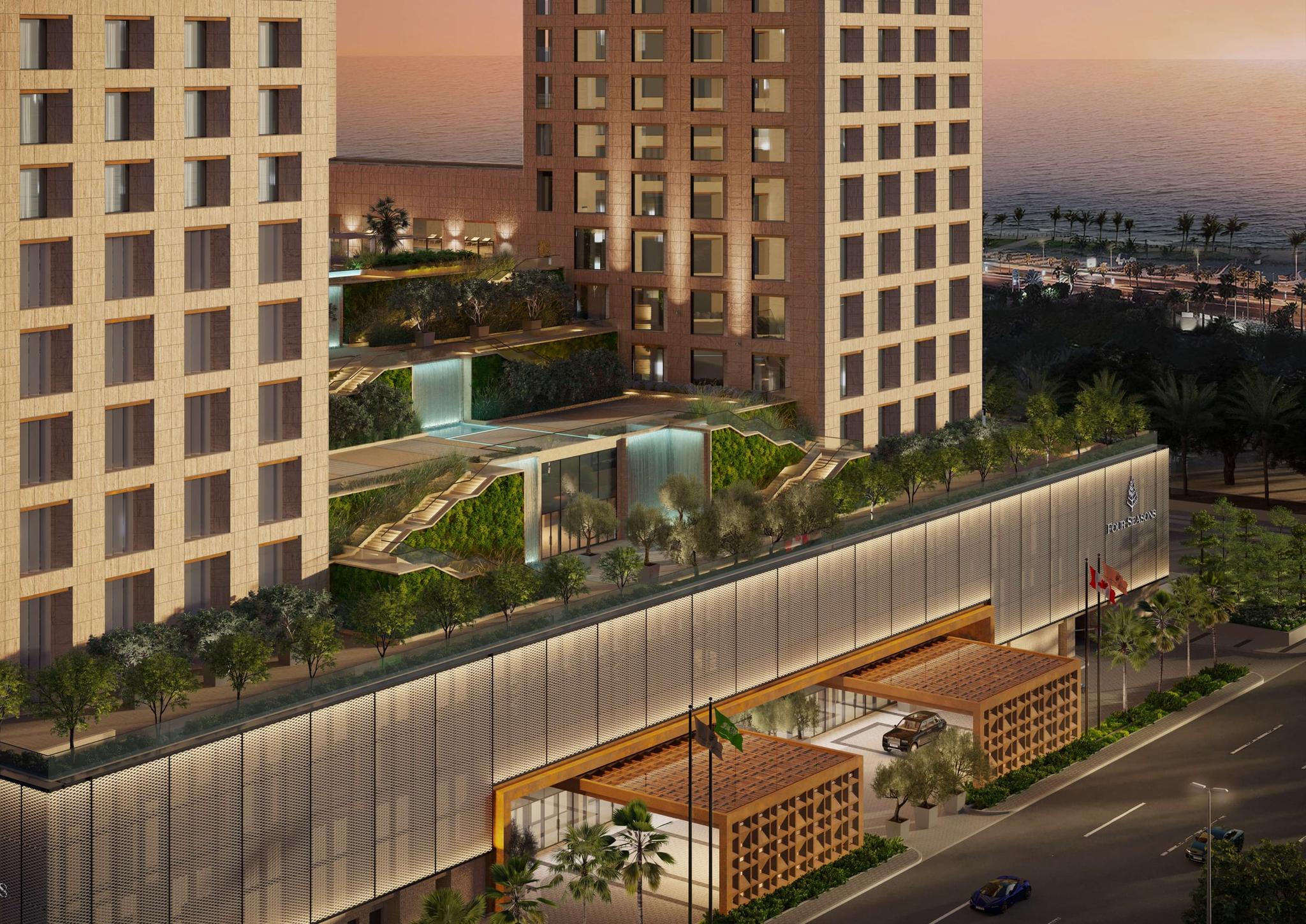
| SAR 6,716,214 | A one-bedroom at Four Seasons Private Residences Jeddah | USD 1,790,990 |
| SAR 8,000,000 | A villa | USD 2,133,333 |
These are before your bank's margin and fees.
- If your money is in US dollars, the riyal price converts at a stable rate while the peg holds.
- If it is in pounds, euros, rupees or another currency, your exposure is to the dollar. Divide the riyal amount by 3.75 for its dollar value; what it costs you depends on your currency's rate against the dollar on the day you pay.
- On a payment plan over several years, that exposure runs for the whole build. On the Padel Living two-bedroom, each of the five payments of SAR 158,000 is USD 42,133 at the peg; in any other currency, each one is priced on its own day.
The riyal amount of each instalment is fixed by the contract. Decide early whether to convert as you go or to hold riyals or dollars for later instalments. A peg is a central bank policy, not a guarantee. Lay out a plan in your own currency below, and use the owning from abroad planner for the rest of the set-up.
The home and its plan
Your currency
Your view of value
Paid before handover
SAR 1,897,200
90% of the price, before the keys. The balance of SAR 210,800 falls due at handover (Month 2).
- On booking: Booking payment20% of the price
- SAR 421,600
- In instalments during construction: Construction instalments70% of the price
- SAR 1,475,600
- On handover, from December 2030: Handover payment10% of the price
- SAR 210,800
- Total
- SAR 2,108,000
Value at handover, your assumption
SAR 2,108,000
At zero change, the price you agreed.
Against the price
SAR 0
On paper only, before the costs of buying and selling.
In short
You commit SAR 2,108,000 across 3 payments: 90% before handover and 10% at it.
The schedule is the one published for Amaya Jeddah, completion Q4 2030. The sale contract governs; check it before you pay. Off-plan projects are licensed through Wafi, and each has its own escrow account: pay into it, not to the developer directly. Converted at the reference rates of 13 November 2026 (European Central Bank reference rates via frankfurter.dev, converted at the riyal's dollar peg (3.75)); your bank's rate will differ. We do not predict prices or exchange rates. See Wafi.
Sources for these figures
- REGA, Wafi: off-plan sales and leasing
- Law of Selling and Leasing Off-Plan Real Estate Projects, Royal Decree M/44 (REGA, Bureau of Experts translation)
- SAMA, commitment to the exchange rate of 3.75 riyals to the US dollar, 4 May 2020
- European Central Bank reference rates via frankfurter.dev, converted at the riyal's dollar peg (3.75); AED from its dollar peg (3.6725), 13 November 2026
Talk it through
An adviser can confirm the current schedule and price list, and the project's Wafi licence and escrow account.
Send me this payment plan
Your schedule by email, payment by payment, with an adviser to check it against the developer's current terms.
Email me the plan
Opening a Saudi bank account as a foreign property buyer
The implementing regulations, published on 3 July 2026, require a non-resident individual to obtain a digital identity, open a Saudi bank account in their own name and obtain a Saudi mobile number linked to that identity before buying (Deloitte). The digital identity starts at a Saudi embassy or mission abroad (REGA, 22 January 2026). In July 2026 SAMA directed every bank in the Kingdom to open accounts for individuals and companies covered by the ownership law, and set out what they ask for (Argaam, 3 July 2026).
| Buyer | What the bank asks for |
|---|---|
| Individual | A copy of the digital identity; a passport copy, where available; a home address in your country of residence; contact details; a Saudi mobile number registered in your name and linked to the digital identity |
| Company | Its Saudi registration certificate; the authorised account representative; the registered office address; a Saudi mobile number linked to the digital identity; the articles of association showing owners, activities and directors; where applicable, its contract with a licensed broker or developer |
The rules also require biometric identity checks and digital payment channels. Your bank will ask where the money comes from, so have the evidence ready before you apply: it is the step that most often slows a first transfer.
Transfer routes to Saudi Arabia
| Route | What it is for | What to check |
|---|---|---|
| International bank transfer from your bank to your Saudi account | Moving the bulk of the funds | The exchange rate against the peg, your bank's fee and any intermediary bank's fee; the account name must match yours |
| A licensed money transfer company | Smaller amounts, where your bank's rate is poor | That it is licensed; SAMA urges the public to deal only with institutions licensed by the relevant authority |
| Transfer within the Kingdom from your Saudi account | Every payment in the purchase: escrow, seller, taxes, fees | The IBAN, the account name and the payment reference |
| SADAD or an official government portal | The Real Estate Transaction Tax and statutory fees | The invoice number |
| Cash | Not for a property purchase | Government charges are not accepted in cash; cash of SAR 40,000 or more must be declared at the border |
Send money from an account in your own name to an account in your own name. Third-party payments, and transfers that do not match what the bank knows of you, are what trigger questions.
Paying a developer's escrow account, step by step
Off-plan money is protected by the Law of Selling and Leasing Off-Plan Real Estate Projects and its regulations. Each licensed project has its own escrow account, held in riyals, usable only for that project and out of reach of the developer's creditors; money leaves only on the developer's request approved by the consulting engineer and the certified accountant. Our off-plan guide covers the licences.
- Check the project on Wafi. Find the project and its licence type. Under a marketing licence, a reservation is capped at 5% of the unit's value and must go into escrow.
- Get the escrow details in writing. REGA's licence for a project that takes reservations carries the escrow account's IBAN, so ask the developer for the licence and compare the IBAN with the one on your payment request.
- Confirm the account name. It should be the project's escrow account, not the developer's company account, a broker's account or a personal account.
- Fund your Saudi account in time. Allow for the international transfer and your bank's checks before the due date in the contract.
- Pay with the right reference. Each deposit carries a reference that includes your unit number, as the regulations require.
- Keep the proof. Save the bank's confirmation and the developer's receipt for every payment.
- Check your record. You may ask for your unit's accounting record at any time and receive a copy within 10 working days.
A request to pay a reservation or an instalment into any account other than the project's escrow account is a reason to stop. Taking reservation money and not depositing it in escrow carries up to five years in prison, a fine of up to SAR 10 million, or both.
If a reservation is refunded during the marketing period, REGA instructs SAMA to transfer it to the buyer's own account, which is one more reason to pay only from an account in your name.
Paying for a ready home: the price, the tax and the fees
On a resale, the price moves through the transfer process. For a property worth up to SAR 20 million, the Najiz electronic transfer has the buyer deposit the price into an escrow arrangement within 10 business days of exchange, and the system pays the seller once the transfer completes (Trowers & Hamlins, July 2026). The Real Estate Transaction Tax is invoiced by ZATCA at 5% and must be paid before the transfer; the law makes the seller liable, but the contract can pass the cost to you.
Here is the money a buyer moves on two resale purchases, if the contract passes the tax and the brokerage to the buyer:
| SAR 2,000,000 apartment | SAR 8,000,000 villa | |
|---|---|---|
| Price | SAR 2,000,000 | SAR 8,000,000 |
| Real Estate Transaction Tax, 5% | SAR 100,000 | SAR 400,000 |
| Brokerage, up to 2.5% | SAR 50,000 | SAR 200,000 |
| VAT at 15% on the brokerage | SAR 7,500 | SAR 30,000 |
| Total to move | SAR 2,157,500 | SAR 8,630,000 |
| In US dollars at the peg | USD 575,333 | USD 2,301,333 |
All statutory taxes and fees are settled electronically, through SADAD or official government portals, before the transfer application, and cash and post-dated cheques are not accepted (Trowers & Hamlins, July 2026). On the new developments we sell, the developer pays our fee, so there is no brokerage line for the buyer. The 2% REGA fee for non-Saudis is not a purchase cost: it falls when a non-Saudi sells. Run your own figures with the buying cost calculator, and see property costs and taxes for every charge.
The documents to keep
Under the Anti-Money Laundering Law, banks in the Kingdom must monitor transactions against what they know of the customer and, where necessary, the customer's source of funds, and must examine large or unusual transactions with no clear purpose (Article 13). They keep records for at least ten years (Article 12). Make their job easy:
- Send money from an account in your own name.
- Keep each transfer confirmation with its payment reference.
- Keep evidence of where the money came from: a sale, savings, a bonus or an inheritance.
- Keep the developer's receipts and your escrow accounting record.
- Keep the ZATCA invoice and the payment receipt for the transaction tax.
- Keep the sale contract and the title deed.
You will need the same trail when you let the home, sell it or send money home.
Getting rent out of Saudi Arabia
Rent arrives in your Saudi account. ZATCA lists rent, including the lease of immovable property, among the payments to non-residents that carry withholding tax at 5%. The duty to withhold falls on the resident payer: a company, a public body or an individual acting in the course of a business.
As a worked example, assume a company tenant pays SAR 100,000 a year for your home (an assumption, not a market rent). The tenant withholds SAR 5,000 and pays it to ZATCA, and SAR 95,000 reaches your account: USD 25,333 at the peg, before any management fee or service charge. How the rule applies when your tenant is a private individual, or when a manager collects the rent, is a question for a Saudi tax adviser before the first payment, and a double taxation agreement may reduce the rate. Our guide to rental income and Ejar covers lease registration and the Riyadh rent freeze.
Getting sale proceeds out of Saudi Arabia
The buyer pays electronically into your Saudi account, and the US Commercial Service's 2026 guide records no limitation on the outflow of funds, including capital. What comes off first are the costs of selling. When a non-Saudi owner disposes of a property in the zones of Riyadh, Jeddah, Makkah or Madinah, REGA charges a fee of 2% of the value; it is a cost when you sell, not when you buy.
| A non-Saudi sells in Riyadh | SAR 2,000,000 apartment | SAR 8,000,000 villa |
|---|---|---|
| Sale price | SAR 2,000,000 | SAR 8,000,000 |
| Real Estate Transaction Tax, 5%, if you bear it as seller | SAR 100,000 | SAR 400,000 |
| REGA fee, 2% | SAR 40,000 | SAR 160,000 |
| Brokerage, up to 2.5%, with 15% VAT on the fee | SAR 57,500 | SAR 230,000 |
| Proceeds to send home | SAR 1,802,500 | SAR 7,210,000 |
| In US dollars at the peg | USD 480,667 | USD 1,922,667 |
Keep the sale contract, the deed, the ZATCA receipt and the REGA fee receipt ready for your bank, and ask it in advance what it needs so the proceeds can leave without delay. Our guide to selling property in Saudi Arabia covers the sale itself, including tax on the gain.
Your home country's rules
Your own country may limit or report what you send abroad, and may tax the rent or the gain on a Saudi home. Our pages for buyers from India, Pakistan, Egypt, the UK and the USA set out those rules. Take advice where you are tax resident before the first transfer. If you plan to borrow in the Kingdom, read mortgages for foreigners before you reserve.