A branded residence carries every risk of a new home plus four of its own: the brand can leave, the hotel or club can arrive after the homes, the service standard can go unfunded, and the premium you pay can fail to hold on resale. The brand licenses its name; the developer builds and sells. So the checks that matter most are on the licence, the developer and the sale agreement, not on the name over the door. Below, each risk is set against the document or platform that tests it.
The checks every buyer runs on any Saudi home, from the deed to the escrow account, are in our title deeds and due diligence guide; the costs of a branded home are in branded residence costs and service charges.
The risks of a branded residence, and how to check each
| Risk | What can go wrong | How to check it |
|---|---|---|
| Brand licence | The licence ends and the name comes off the building | The licence term, the termination events and what the sale agreement says about loss of brand |
| Developer delivery | The home is late or the specification changes | Completed projects, the main contractor, construction progress, the Wafi licence |
| Amenity timing | The hotel, club or golf course opens after the homes | The amenity programme in writing, and who is obliged to deliver it |
| Service standard | Upkeep is under-funded and the standard slips | The management agreement, the first-year budget, how increases are approved |
| Payment plan | Fixed-date instalments run on while construction slips | The plan's triggers and the delay clause |
| Title and eligibility | The address is outside a zone open to you, or the wrong transfer system is used | REGA's zone map, the Real Estate Registry, the project licence |
| Resale | The premium does not hold, or the market is slow | Comparable resales, competing supply, your holding period |
Saudi property law has changed fast since 2023. Use an independent Saudi-qualified lawyer for the sale agreement and the title.
The brand licence: what happens if a brand leaves
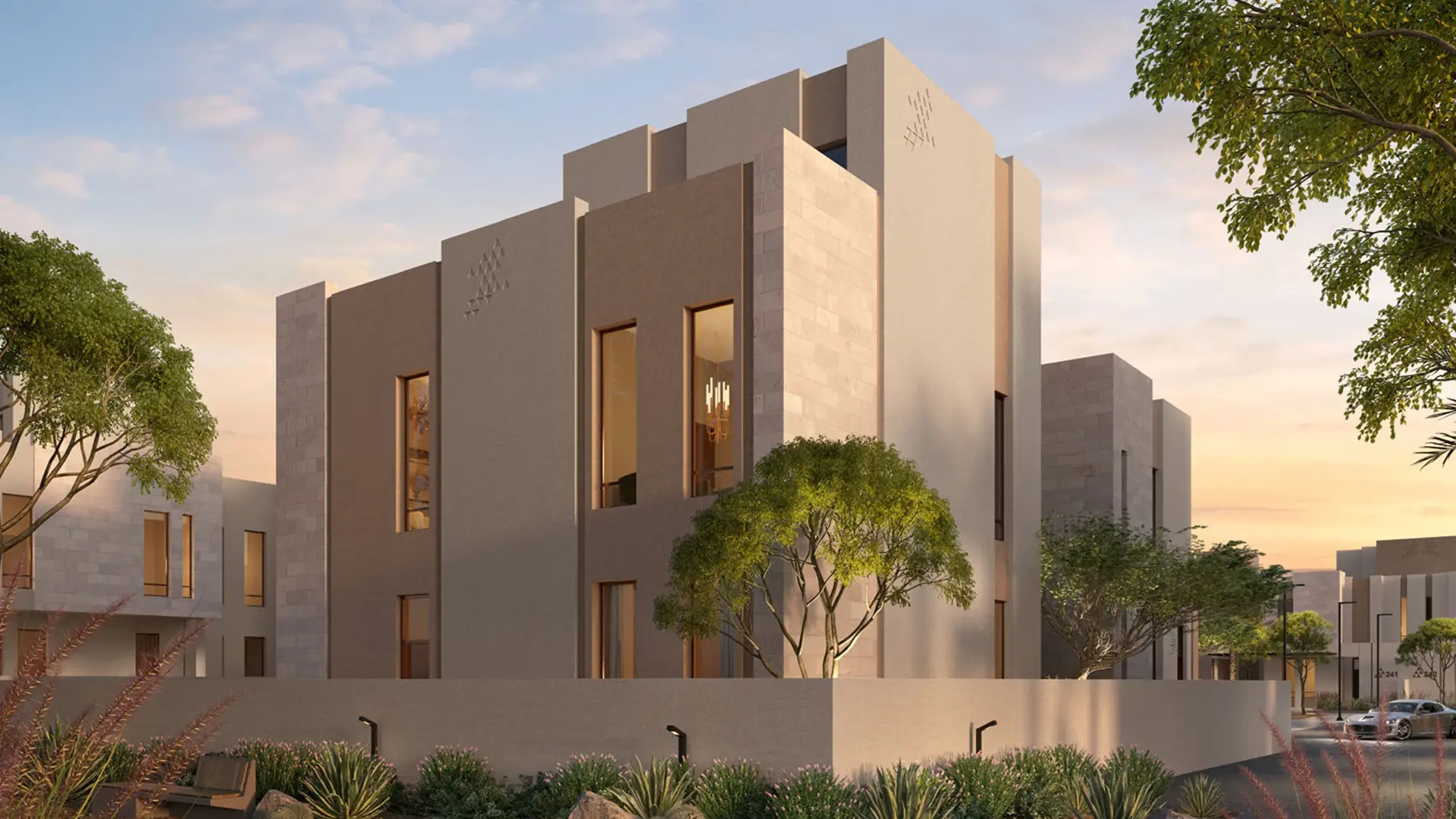
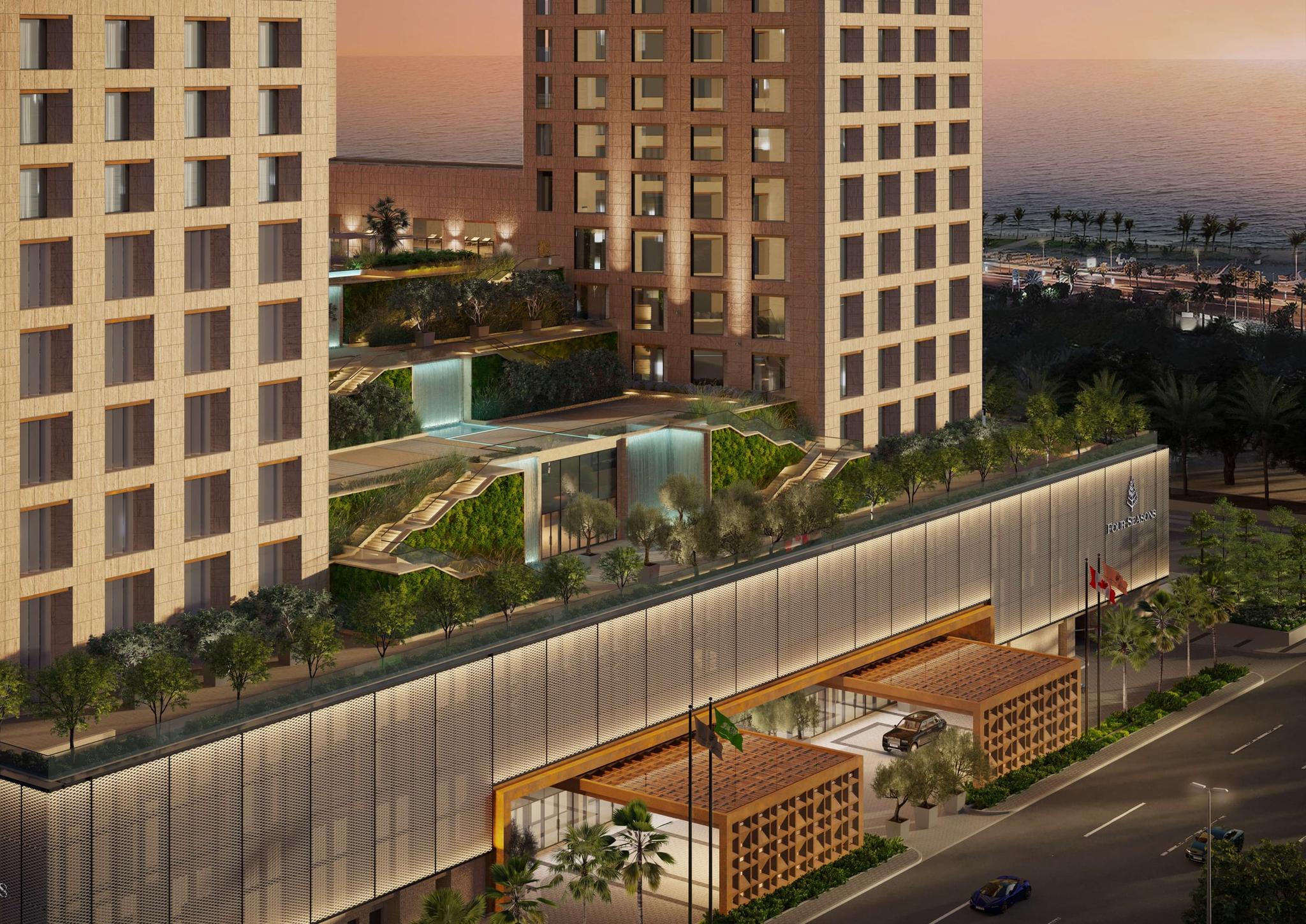
In most branded residences the brand owns, builds and sells nothing. It licenses its name and standards to the developer and, in hotel-run schemes, manages the building. Dar Global uses the Trump name at Trump Tower Jeddah, Trump Plaza Jeddah and the Wadi Safar mansions under a licence from The Trump Organization. Midad develops and sells the Four Seasons residences in Jeddah, and Four Seasons announced in 2022 that it would act as property manager for each residence.
Scott Antel, a hospitality lawyer, called the brand's long-term presence perhaps the weakest of the assurances a buyer receives. He described what buyers are usually asked to acknowledge: that the brand is not the developer and carries no liability for the build or the sale, that its right to use the name is limited and revocable, that it ends if the brand leaves an adjoining hotel, that the brand may end the association without owners' consent, and that the buyer has no claim if the name is removed. He found the most common reason for a brand leaving was a failure to fund upkeep of the common areas to brand standard, and little precedent for owners recovering the premium they paid.
No Saudi project on sale publishes its licence term, so ask:
- How long is the licence, and how long is the residential management agreement?
- On what events can either party end it?
- Does the sale agreement give you any remedy if the brand is removed?
- If the residences depend on a hotel, what happens if the hotel changes operator?
The developer's delivery record
The developer carries delivery, so test its record first. Three developers stand behind the branded projects we sell: Midad, Dar Global and Dar Al Arkan.
| Project | Developer | What the record shows |
|---|---|---|
| Four Seasons Private Residences Jeddah | Midad | Under construction; handover due June 2027; instalments every two months on fixed dates, not construction stages |
| Trump Tower Jeddah | Dar Global | Main works awarded to Arabian Construction Company in November 2025, about SAR 2 billion, after the foundations were finished; handover due December 2029 |
| Etoile by Elie Saab, Sedra | Dar Al Arkan | Launched November 2023; in its final delivery phase; status confirmed villa by villa |
| Neptune Interiors by Mouawad, Sedra | Dar Global | Under construction; completion due Q4 2027 |
| Trump Mansions, Wadi Safar | Dar Global | Homes due 31 December 2029; golf, club and hotel on a 2030 to 2031 programme |
| Trump Plaza Jeddah | Dar Global | Off-plan; launched January 2026; handover due Q4 2030 |
With a developer whose record in the Kingdom is short, rely on what can be verified: the listed parent and its published accounts, the named main contractor and its contract, progress on site, and the statutory protections below.
Off-plan protection: what Saudi law covers and what it does not
There is no consumer protection regime written for branded residences. Protection comes from the Law of Selling and Leasing Off-Plan Real Estate Projects (Royal Decree M/44):
- Licensing. The developer must be in the Registry of Developers, and the project must be licensed, before it is sold or advertised (Article 3).
- Escrow. One escrow account per project, activated only after the licence is issued and the land deed annotated; the money may be spent only on the project and cannot be seized by the developer's creditors (Articles 9 and 10). A reservation during the marketing licence may not exceed 5% of the unit's value (Wafi).
- Control. Every payment out needs the signatures of the developer, the consulting engineer and the accountant (Article 11).
- Retention. 20% stays in escrow until completion, then 5% of the construction cost, or a bank guarantee, for a year (Articles 13 and 14).
- Delay. Where delivery is late for a reason within the developer's control, the buyer of a home is entitled to compensation equal to the rent of a similar property (Article 20).
These rules protect the money and the build. They do not guarantee the brand, the opening date of the hotel or the club, the service standard or the premium. Our off-plan guide covers the process in full.
Amenity and timing risk
The amenity is often half of what a branded buyer pays for, and it is often on a different timetable. At Wadi Safar the mansions are due on 31 December 2029 while the golf course, club and hotel follow on a 2030 to 2031 programme, so the setting will still be finishing when you move in. At Trump Tower Jeddah, 90% of the price is paid before the keys, on a 20 / 70 / 10 plan. At Four Seasons Jeddah the instalments fall every two months on fixed dates, so they run on even if work slips.
Ask for the amenity programme in writing, which company is obliged to deliver each amenity, and whether your payment dates are tied to construction stages or to the calendar.
Service standard and the service charge
A brand's standard costs money every year. Four Seasons Jeddah charges SAR 339 per square metre a year, SAR 56,613 on the 167 sqm one-bedroom; the Wadi Safar mansions pay SAR 34 per square metre of plot. A charge set too low is a risk in itself, because under-funded upkeep is what most often costs a building its brand. Before you reserve, ask for the first-year budget, what it covers, how shared costs with the hotel are split, how increases are approved and whether there is a reserve fund. The figures are worked through in our costs guide.
How secure is a title deed for a branded residence in KSA
A branded residence carries the same title deed as any other home; the brand appears nowhere on it. Security depends on registration. In areas designated for registration, transfers must be registered on the Real Estate Registry, and registered entries are conclusive evidence of ownership. REGA states that a registry deed gains absolute proof one year after the owners' lists are posted, after which it cannot be challenged except for a clerical error or forgery.
- Not every area is on the registry yet. Elsewhere the notarial system applies, and Trowers & Hamlins warns that using the wrong system can make a transfer invalid.
- New projects. Every unit in a new project must be registered electronically before sales begin (Trowers & Hamlins, July 2026).
- Non-Saudi buyers. Ownership is allowed inside the designated zones under the law in force since 22 January 2026, and is valid only once registered (Article 8). A buyer abroad first obtains a digital identity, a Saudi bank account and a linked Saudi mobile number.
- During construction you hold rights under the sale agreement, not a finished home, so you rely on the off-plan protections until the transfer of ownership.
The foreign ownership guide sets out the zone rules.
Verifying branded residence claims: official sources
- Confirm the brand from the brand. A real branded residence is announced by the brand itself, as Four Seasons did for Jeddah through its press room on 9 November 2022.
- Identify the contracting developer. The seller is a specific legal entity, which may differ from the marketing name. It must be the entity that holds the licence.
- Check the licence and escrow. Find the developer and the project on Wafi, and get the escrow account's bank and name in writing.
- Check the zone and the registry. Match the address to REGA's zone map and confirm which registration system applies.
- Use only developer-issued prices and dates. Prices and completion dates that come from neither the developer nor the brand, such as those on aggregator sites, are not evidence.
- Get the costs in writing. The service charge, who bears the 5% transaction tax, and any brand or management fee.
Resale and market risk
There is little local resale history to judge a brand premium by. Savills puts the regional brand premium at 44% against 33% globally, partly because the region has few comparable unbranded schemes, and puts the growth of the branded pipelines in Saudi Arabia and Egypt at 800% to 1,500% over its forecast period to 2031. Knight Frank counted about 1,685 branded units in the Kingdom in 2026, with 1,900 more in the pipeline. More supply gives a reseller more competition.
The wider market matters too. Knight Frank recorded a 55% fall in Riyadh transaction volumes over the twelve months to early 2026. If you may need to sell within a few years, plan for a slow exit, and count the exit costs: the 5% transaction tax if you bear it, a broker's fee, and, for a non-Saudi selling in Riyadh, Jeddah, Makkah or Madinah, the Real Estate General Authority's 2% fee on the sale.
What we ask for before a client reserves
For every branded home we sell, we ask the developer, in writing, for the licence term and the loss-of-brand clause in the sale agreement, the amenity programme and who delivers it, the first-year service charge budget, the Wafi licence number and the escrow account. We check the licence on Wafi and the plot on REGA's zone map ourselves. A developer that will not answer one of those questions in writing has told you something.